Interview with Martina Lascialfari, General Director of the Fondo per la Repubblica Digitale Impresa Sociale
Reducing the digital divide also means creating new opportunities for growth, participation, and economic independence. It is from this understanding that SheLeads takes shape, a project dedicated to female entrepreneurship and digital training promoted by the Fondo per la Repubblica Digitale Impresa Sociale, with the support of the Visa Foundation.
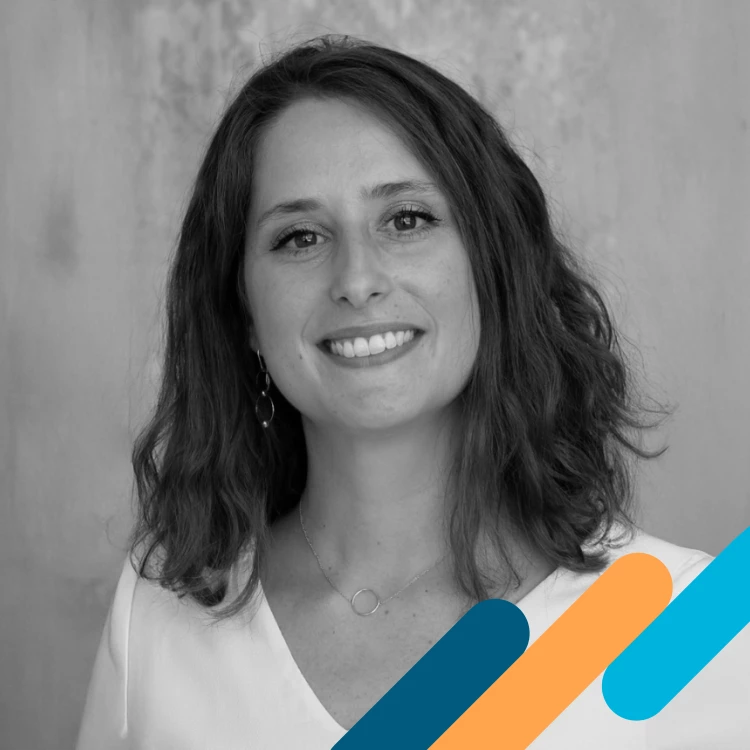
In this interview, Martina Lascialfari explores the value of digital skills as a driver of inclusion, the potential of the digital economy for women, and the importance of building more equitable, participatory, and representative innovation models.
SheLeads is an initiative that promotes women’s entrepreneurship and digital training in the Metropolitan City of Milan. What was the starting point of the project?
The starting point was a very concrete reflection: today, digital transformation is profoundly changing the way businesses are run, but not everyone has the same opportunities to access skills, tools, and professional networks. This gap is one of the main factors that particularly hinders women who want to start or grow a business.
Data shows that this issue is still urgent. According to the latest ISTAT data, in Italy only 54.3% of the population has at least basic digital skills, compared to a European average of 60%. In addition, women continue to be underrepresented in technology and digital sectors: in Europe, only 1 in 6 ICT specialists is a woman.
Promoted by the Fund for the Italian Digital Republic Social Enterprise with the support of Visa Foundation, SheLeads was created with the aim of turning digital skills into a lever for autonomy, economic participation, and social growth. The project, supported by Visa Foundation with a contribution of 250,000 dollars, is part of Visa’s broader commitment — Official Payment Technology Partner of Milano Cortina 2026 — to leave a positive and lasting legacy in the Lombardy capital, a city that has hosted the Winter Olympic and Paralympic Games this year. We embraced Visa’s challenge to focus on Milan and its metropolitan area, as they represent one of the country’s main entrepreneurial ecosystems, but also a territory where major opportunities coexist with strong territorial and social inequalities.
SheLeads therefore aims to provide real tools such as digital training, financial education, networking, and role modeling, to support women entrepreneurs and aspiring entrepreneurs in developing their ideas and businesses. The goal is twofold: on one hand, to support individual professional pathways; on the other, to help strengthen a more inclusive and innovative ecosystem.
How did the collaboration between the Fund for the Italian Digital Republic and Visa Foundation come about? What motivated you to launch this initiative together?
The collaboration is rooted in a shared vision: viewing digital skills as a fundamental tool for inclusion and economic development. The Fund for the Italian Digital Republic Social Enterprise works every day to reduce the digital gap and create opportunities for people most exposed to changes in the labor market. At the same time, Visa Foundation supports the growth of SMEs and women’s entrepreneurial empowerment, and chose the Fund as a partner to implement this initiative.
SheLeads was born from the meeting of these two complementary perspectives. We were united by the belief that investing in women entrepreneurs means generating an impact that goes beyond individual businesses: it means strengthening communities, territories, and local economic networks. That is why we wanted to jointly build a project that would not only be educational, but also capable of generating a concrete and lasting legacy in the region.
The Fund for the Italian Digital Republic is committed to supporting projects dedicated to training and digital inclusion. In recent years, the digital economy is increasingly seen as a lever for inclusion. What concrete opportunities can it offer women, especially in contexts still marked by inequality?
The digital economy can be a powerful driver of growth and independence because it reduces some of the barriers that have historically limited women’s access to employment and entrepreneurship. For example, it enables the launch of online businesses, access to wider markets through e-commerce, more flexible working models, the creation of digital professional networks, and the use of marketing and management tools that make even micro-enterprises more competitive.
However, for these opportunities to be truly accessible, skills are essential. This is why training is central. It is not enough to talk about technology: people must be put in a position to use it in a conscious and strategic way. In Italy, a significant digital divide still exists. Despite progress in recent years, almost one in two people still lacks adequate digital skills, and the gap is even more evident in more vulnerable social contexts. Differences are also emerging in the field of Artificial Intelligence: according to ISTAT in 2025, only 16.1% of Italian women reported using AI tools, compared to 19.6% of men.
But there is another issue. How many women contribute to the development of technologies and Artificial Intelligence applications? According to the World Economic Forum’s Global Gender Gap Report, only 22% of professionals in the AI sector are women. The low female participation in decision-making processes and technological development risks leading to a less equitable future, shaped by biases and entrenched patterns that are inevitably less representative and inclusive.
Initiatives like SheLeads aim to address precisely these issues: providing practical tools, support, and confidence so that digital technology becomes a strategic lever for greater autonomy, representation, and strength of women’s voices in shaping economic and social development.
Looking ahead, what impact do you hope SheLeads will generate in the coming years?
We first of all hope that SheLeads can have a concrete impact on participants’ lives: new skills, meaningful relationships, greater confidence in their abilities, and stronger professional and entrepreneurial opportunities.
But the ambition of the project is broader. We aim to help spread a more inclusive innovation culture, in which women increasingly become protagonists in the country’s economic and digital processes. We are also very interested in the multiplier effect that initiatives like this can generate. When a woman acquires skills, starts a business, or strengthens her economic independence, the impact often extends to the community, territorial networks, and future generations.
In Lombardy, the main hub for women’s entrepreneurship in Italy, women-led businesses currently represent about 19.9% of the total. This is an important figure, but it also highlights how much room there is still to strengthen female participation in productive sectors and innovation development.
Finally, we hope SheLeads can become a replicable model: a concrete example of collaboration between different types of stakeholders joining forces to promote digital inclusion, women’s entrepreneurship, and sustainable local development.